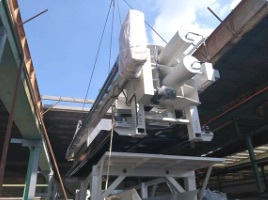
Filter presses are the preferred choice for solid-liquid separation.
Highly efficient dewatering, resulting in low moisture content in the filter cake
Robust structure, with simple operation and maintenance
Widely used for the fi

Using a filter press for solid-liquid separation in sludge treatment
High-pressure dewatering for various types of industrial sludge, featuring automatic plate shifting and cake discharge; the resulting sludge cakes are dry and firm—no water seeps out even when squeezed by hand.

The Role of Membrane Filter Presses in Municipal Wastewater
completed, the membrane applies a second high-pressure squeeze to the filter cake, forcing out part of the water that ordinary filtration cannot remove. The effect is direct: the cake moisture content can be 10–15 percentage points lower than that of an ordinary filter press, and municipal sludge can be stably reduced to below 60%.

40 m² Skid-Mounted Membrane Filter Press “Tests the Waters” in Power Plant Desulfurization Wastewater
From a 40 m² skid-mounted filter press to future large-scale equipment covering the entire plant’s desulfurization wastewater, this path does not seek to accomplish everything in one step. Instead, it uses a pragmatic “pilot test” to gain the technical confidence for scale-up decisions. At a time when desulfurization wastewater ZLD is moving from a policy requirement to engineering normality, this approach of validating first and scaling up later may be more instructive than simply stacking up equipment specifications.

What Happens to Sludge Cake After Filter Press Dewatering
After sludge passes through a filter press and completes dewatering, it turns into solid sludge cake with much lower moisture content. Many wastewater plant ope

How to Select the Right Feed Pump for a Sludge Filter Press
Hoosing the correct feed pump is one of the most important decisions for reliable sludge dewatering with a filter press. A mismatched pump will cause unstable f
Core business • One-stop Service